Selling a House With Back Taxes in North Carolina
The property tax bill is still on the kitchen counter. Then another notice arrives. You know the balance is growing, but the house is still your home, your investment, or a place filled with family memories. It is hard to think clearly when each letter brings a new deadline. If you need to sell a house with delinquent property taxes in North Carolina, you have options. You can pay the balance, ask about a payment plan, or sell the property before the tax foreclosure is final. Once a sale closes, the proceeds are used to pay off the delinquent taxes.
We work with homeowners in Charlotte and across North Carolina to buy houses on your timeline, even if that is less than 10 days. This guide explains what happens when taxes go unpaid, what the county can do, and how John Buys Your House approaches a simple, as-is purchase. You do not need to sort through every notice alone.
What Happens When Property Taxes Go Unpaid?
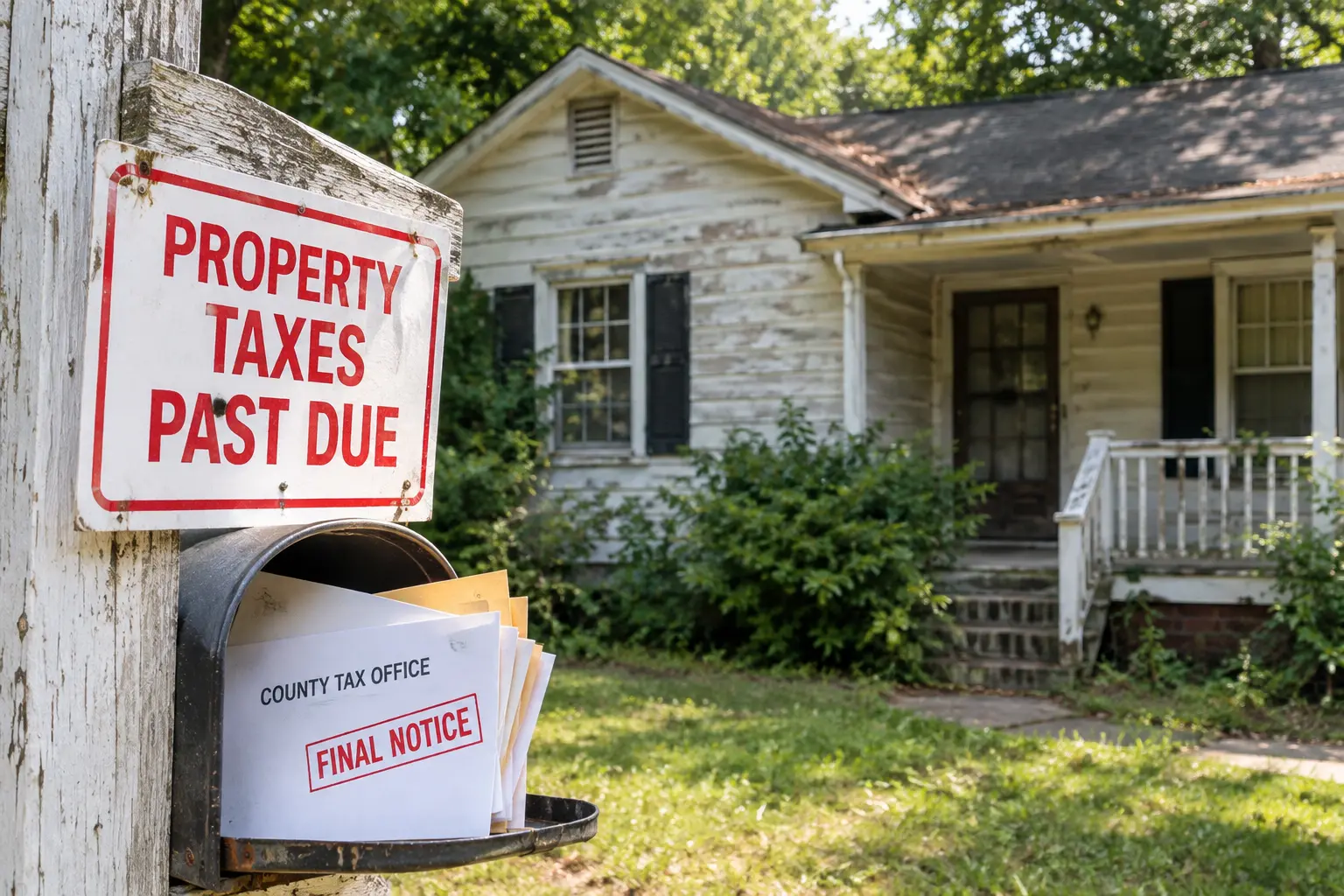
Most property owners first realize there is a problem when tax bills, notices, collection letters, and added interest charges start arriving. As the balance grows, the tax collector can pursue collection actions such as garnishment, attachment of certain funds, and other legal remedies. For rental properties, these actions can also affect rental income. A tax foreclosure is different from a mortgage foreclosure. It begins when property taxes go unpaid, even if mortgage payments are completely current. In these situations, the county can start the legal process to sell the property and recover the unpaid tax debt.
What Does Delinquent Property Taxes Mean?
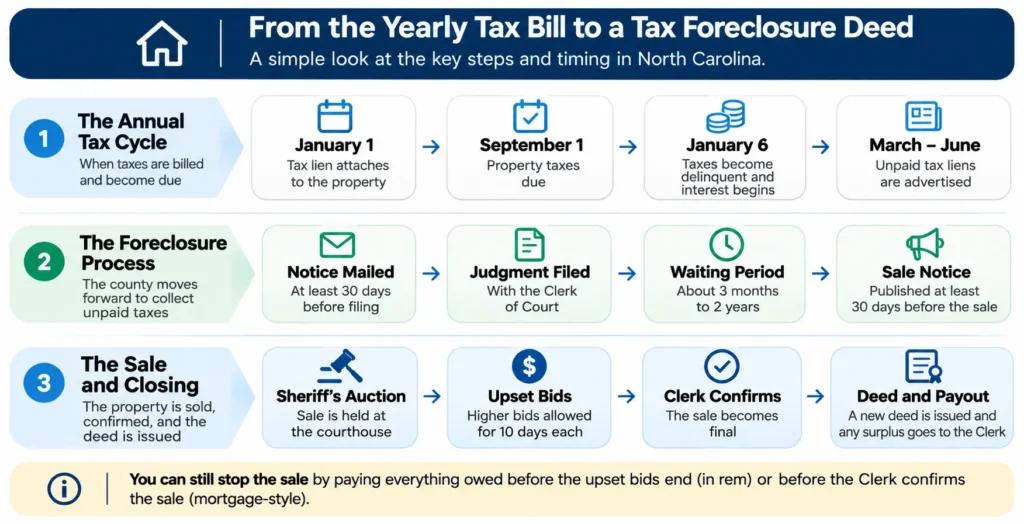
In North Carolina, property taxes are assessed annually by local governments and become a lien against the property each January 1. In Mecklenburg County, the tax office collects county taxes along with any applicable city taxes. Taxes are generally due on September 1, and January 5 is the last day to pay without interest. Any unpaid balance becomes delinquent on January 6. Interest starts at 2% for January and 0.75% is added for each additional month, or part of a month, thereafter.
Because the tax lien is attached to the property itself, it does not disappear when ownership changes. This is why homeowners can still sell a house with delinquent property taxes. During closing, the attorney obtains the payoff amount and uses the sale proceeds to pay outstanding taxes and other required obligations before the remaining funds are distributed to the seller.
A missed payment does not mean you lose your property overnight. It does mean the amount owed continues to grow, and property tax liens carry priority over most other claims against the property. If the delinquent taxes remain unresolved, the county can move forward with stronger collection efforts and, ultimately, the tax foreclosure process.
North Carolina Property Tax Dates At A Glance
The calendar below shows why a balance grows even when the county has not started foreclosure.
| When | What Happens |
| January 1 | Ownership and taxable value are measured. The year’s tax becomes a lien attached to the property |
| By July 1 | Local governments set their tax rates |
| July or August | Tax bills are generally mailed |
| September 1 | Property taxes are due |
| January 5 | Last regular day to pay without interest; holiday or weekend rules can change the effective date |
| January 6 | Unpaid taxes become delinquent. A 2% interest charge applies for January |
| February 1 Onwards | An additional 0.75% applies each month or part of a month |
| February | Tax collector reports unpaid taxes to the local governing board |
| March 1 – June 30 | Unpaid tax liens are advertised as required by law. Advertising costs can be added to your total tax bill |
| June 1 | Usual deadline for applications for qualifying homeowner tax relief programs |
For example, a $3,000 bill left unpaid across several tax years does not stay at $3,000. New annual bills, interest, advertising, and foreclosure costs add to the total. Ask the county for a current payoff figure rather than relying on an old notice. The tax bill generally names the January 1 owner. The lien remains with the property. During a typical sale, the closing attorney handles back taxes and the year’s tax adjustment.
Check the current amount directly with your county. A bill from an earlier year will not show all later interest, fees, or legal costs.
What the County Can Do Before Foreclosure
A late tax bill does not mean an auction is already scheduled. Counties have several ways to collect unpaid taxes. Their practices and payment arrangements differ.
Collection Actions
- Attachment and garnishment: The collector can reach certain wages, bank funds, rent, and other money owed to the taxpayer. Wage withholding is limited by statute.
- Levy and sale: The collector can seize and sell eligible personal property, including vehicles or equipment.
- State debt setoff: Certain state refunds and winnings can be used toward unpaid taxes.
- Payment arrangements: Ask the tax collector whether a payment plan is available. Some counties restrict plans after enforced collection begins.
If you missed a bill because a mortgage escrow account fell short, contact both your lender and the tax office. A missing bill does not cancel the tax debt.
When The County Starts Foreclosure
Each county sets its own collection priorities. Vacant property, unreachable owners, and several years of unpaid taxes often make foreclosure more likely. A foreclosure can still start sooner. A county generally has a ten-year collection window measured from the original due date. This is a legal defense that must be raised; do not assume an old balance disappears on its own.
Two Ways Tax Foreclosure Works in North Carolina
North Carolina law provides two tax foreclosure methods. Both can lead to a public auction at the “courthouse steps”. The notices, court process, and person conducting the sale differ.
| Mortgage-style foreclosure (G.S. 105-374) | In rem foreclosure (G.S. 105-375) | |
|---|---|---|
| How it starts | The county files a lawsuit in court | The county files a judgment against the property with the Clerk of Court |
| Who sells the house | A commissioner (usually an attorney) appointed by the court | The sheriff |
| Extra cost added to the owner’s debt | A “reasonable” attorney fee, usually about $2,000 to $5,000 | An administrative fee of $250 |
| Speed | Slower, because it is a full lawsuit | Faster and simpler |
| Deed the buyer receives | Commissioner’s deed | Sheriff’s deed |
Steps Taken in In Rem Foreclosure
- Tax liens are advertised during the required period.
- The collector gives required notices to the owner and recorded lienholders.
- The judgment is filed after the statutory advertising and notice requirements.
- At least three months pass before execution can be issued on the judgment.
- The sheriff gives the required sale notice, including notice at least 30 days before the sale.
- The sheriff conducts the auction. The upset-bid and final-sale rules follow.
Steps Taken in Mortgage-Style Foreclosure
- The county’s attorney reviews ownership and recorded interests.
- The county files suit and serves the required parties.
- The court enters a sale judgment and appoints a commissioner.
- The commissioner advertises and conducts the public auction.
- The sale proceeds through the upset-bid period and court confirmation.
There is no single statewide countdown from the first late bill to auction. Legal minimums do not predict a county’s actual schedule. If you have a case number or sale notice, use that document to confirm your specific deadline.
Foreclosure to Final Sale
The auction is rarely the end of the process. Understanding what comes after the winning bid is announced is just as important as knowing when the auction occurs.
| Stage | What happens | What it means for the owner |
| Public auction | Property is offered to bidders at the courthouse or another authorized location. | The winning bid is not always final. |
| Report of sale | The sheriff or commissioner files the sale report. | Paying the full back taxes and fees or selling the home is the only path forward. |
| Upset bids | A qualifying higher bid can be filed within 10 days. Each new bid restarts the period. | The window to resolve the tax debt is extremely short. |
| Final sale | The purchase of the property has been completed by the final highest bidder. | Ownership moves from the former owner to the new owner via a Sheriffs Deed or Commissioners Deed |
| Distribution | Sale proceeds pay allowed costs, taxes, and other claims in legal order. | Any surplus must be claimed through the Clerk of Superior Court. |
A qualifying upset bid generally must exceed the standing bid by at least 5% or $750, whichever is greater. The County Clerk also requires a deposit to be filed for that amount. The commissioner or sheriff handles the sale. The buyer receives the new deed after the closing process is completed. The buyer becomes responsible for future property taxes.
What Happens to the Auction Money?
- Foreclosure costs, including allowed legal and sale fees, are paid first.
- Property taxes, interest, and penalties covered by the foreclosure are paid.
- Other claims and assessments are handled in the order required by law.
- Remaining funds are held for people legally entitled to them (typically the former owner or heirs).
If the auction price exceeds the debt, the difference is called surplus proceeds. A former owner does not automatically receive a check. Contact the Clerk of Superior Court about the claims process. Do not assume someone will notify you. If the county wins the auction, it can later dispose of the property under the applicable public-sale rules. Once the foreclosure is final, the former owner cannot sell the house as though they still own it.
How an owner can stop a tax foreclosure
If the county has begun foreclosure, focus on the actual payoff and the exact legal deadline. These four paths deserve your attention:
Pay the Full Amount Owed (redemption)
Paying the required taxes, interest, and foreclosure costs can stop the process before the legal cutoff. This is called redemption. The payoff is based on the amount legally owed, not the highest auction bid. The deadline differs by foreclosure method. For mortgage-style cases, redemption runs through confirmation. For in rem cases, the statutory cutoff is tied to the upset-bid period. Get written confirmation from the tax office and a North Carolina attorney.
Sell the House Before Foreclosure Is Final
You can sell a house with back property taxes in North Carolina while you still have legal authority to transfer it. At closing, the attorney obtains the payoff and sends the required money to the tax office. The remaining proceeds go through the normal closing settlement. This route gives you control over the offer and timing. It also avoids depending on an auction price and a later surplus claim. If you need to sell your house before a tax foreclosure auction in Charlotte, tell us the sale date immediately.
Ask About a Payment Plan
Call the tax office before collection moves further. Ask for the total balance, available payment terms, and what happens if a payment is missed. A payment plan does not erase the lien.
Speak With an Attorney About Bankruptcy
A bankruptcy filing can trigger an automatic stay. It does not erase the underlying property tax debt. The effect depends on the case and court orders. Get legal advice before relying on bankruptcy to stop a sale.
Can You Sell Before Tax Foreclosure?
The earlier you act, the more room you have to compare offers and handle title work. This table shows when a direct sale remains an option.
| Your situation | Can you sell to JBYH? | How a sale works | Urgency |
| Behind on taxes; no foreclosure | Yes, if the property and terms are a fit. | The closing attorney pays the tax balance from proceeds. | Growing balance |
| Notice, judgment, or lawsuit received | Yes, before the legal cutoff. | The attorney confirms case status and full payoff, including costs. | High |
| Auction date scheduled | Yes, if closing and payoff are completed in time. | A sale must be coordinated around the actual deadline. | Very high |
| Auction held; upset-bid period open | Yes, however this is a time-sensitive situation and you should understand your options | Redemption and closing depend on the foreclosure method and remaining rights. | Critical |
| Sale final | No sale from the former owner. | The former owner can investigate surplus proceeds. | Ownership lost |
| County now owns the property | No sale from the former owner. | Any later purchase is through the county’s sale process. | Different process |
We do not promise to stop a scheduled auction. While we can close fast, the real estate attorney must receive payoff statements and clear title before the property can be sold. Occasionally, more time is needed to close than might be available during a tax foreclosure auction.
Common Problems That Come With Back Taxes
An overdue tax bill is often only one part of the story. A house can have other debts, repairs, or family issues that make the next step harder.
- A Mortgage or Other Liens. A mortgage does not protect a house from property tax foreclosure. Other recorded claims can also affect the closing. We ask the closing attorney to review the title and get valid payoff amounts.
- A House That Needs Major Repairs. A leaking roof, old plumbing, or years of deferred work can make a traditional listing expensive. We buy houses as-is, so you can discuss a sale without first paying for renovations.
- An Inherited House With Unpaid Taxes. Property taxes continue after an owner dies. The family must address the deed, estate status, and who can sign before closing. Our guide to selling a house during probate in North Carolina explains those steps.
- A Rental House or Vacant Property. Unpaid taxes can build while tenants occupy the house or while it sits empty. Rental income can also be affected by collection action. Tell us about the lease, occupancy, and any city notices.
- Several Owners or Missing Signatures. Every required owner must be accounted for. A missing heir, divorce, or unresolved title issue can delay a sale. A real estate attorney can identify the signatures and information needed.
Selling A House With Back Taxes As-is
A direct sale is one option, though not the only option. A traditional listing can bring a higher price when the house is market-ready and time allows. A direct cash offer can be useful when repairs, deadlines, and carrying costs make a listing difficult.
- No repairs or staging required before we evaluate the house.
- No lender financing contingency in our direct cash purchase.
- We explain the offer and the condition of the property.
- The closing attorney handles the tax payoff and title requirements.
- You can compare the offer with your other options without an obligation to accept.
You can review how John Buys Your House buys houses and explains its cash offers.
Get An Offer Today, Sell In A Matter Of Days…
What Does John Buys Your House Need to Review Your Property?
You do not need a perfect file before calling. Start with the address and what you know.
- The property address and your name as it appears on the deed.
- The most recent tax bill or current balance.
- Letters from the tax collector, county attorney, sheriff, or court.
- Any case number, auction date, or upset-bid deadline.
- Mortgage details, city liens, code notices, or other claims.
- A short description of repairs, tenants, and occupancy.
If you have a sale date, lead with that information. We can then tell you what property details we need to evaluate a direct purchase. The real estate attorney handling the sale must confirm the legal payoff and deadline.
How John Buys Your House helps
- Tell Us What Is Happening. Tell us how much is owed, what notices you received, and what you want to do next. You do not need to know every legal term.
- We Review the House As-Is. We look at location, condition, needed work, and the local market. We also ask about taxes and other title concerns.
- We Make a Cash Offer. If the house fits our buying criteria, we make our offer and you decide whether it works for you.
- The Closing Attorney Confirms Payoffs. A North Carolina real estate attorney checks ownership and the required tax payoff. If foreclosure is underway, the attorney confirms the available closing window.
- Close When the Title Is Ready. Once the required conditions are met, the sale closes and valid debts are paid through settlement. You receive the net proceeds shown on your closing statement.
Tax Relief Programs for Homeowners
If you plan to keep your home, check whether you qualify for property tax relief. These programs reduce or defer qualifying future taxes. They do not erase old unpaid bills.
| Program | Basic eligibility | Benefit |
| Elderly or Disabled Exclusion | Age 65+ or totally and permanently disabled; income threshold applies. | Excludes the greater of $25,000 or 50% of qualifying home value. |
| Disabled Veteran Exclusion | Qualifying totally and permanently disabled veteran or eligible surviving spouse. | Excludes up to $45,000 of qualifying home value. |
| Circuit Breaker Deferment | Qualifying older or disabled homeowner(s); income and ownership rules apply. | Caps current tax as a share of income and defers the rest, subject to repayment rules. |
The 2026 income limits are $38,800 for the Elderly or Disabled Exclusion and $58,200 for the Circuit Breaker Deferment. These limits are subject to change, so homeowners should check with their county tax office for the current eligibility requirements and application deadlines.
Property Tax Terms Explained
| Term | What it means |
| Property tax | Annual tax charged on land and buildings. |
| Tax collector | Local office responsible for collecting the tax. |
| Taxing unit | County, city, town, or other government that levies property tax. |
| Tax lien | Legal claim against the property for unpaid taxes. |
| Delinquent | Past the payment deadline. |
| Back taxes | Unpaid taxes from earlier tax years. |
| Interest | Extra amount added while taxes remain unpaid. |
| Garnishment | Collection from eligible wages, accounts, rents, or other funds. |
| Levy | Seizure and sale of eligible personal property. |
| Tax foreclosure | Legal process to sell property for unpaid taxes. |
| In rem | Foreclosure directed against the property itself. |
| Commissioner | Court-appointed person conducting a mortgage-style sale. |
| Upset bid | Qualifying higher bid filed after an auction. |
| Redemption | Paying the required balance to stop foreclosure before the cutoff. |
| Confirmation | Court’s final approval of a mortgage-style sale. |
| Surplus | Money left after the sale pays required claims. |
| Clerk of Superior Court | Court official who handles specified foreclosure filings and surplus claims. |
| Clear title | Ownership that can be transferred after required claims are addressed. |

real 5 star google reviews from homeowners in charlotte & nearby NC
Don’t just take our word for it!
“John was an absolute pleasure to deal with from start to finish when dealing with my dads estate. It was a crazy situation with a huge mess and he treated us with the utmost respect. He communicated amazingly throughout the entire process and every thing he said he did.
I hope I never have to deal with this type of situation again but wouldn’t hesitate for a second to recommend or call John.”
Thanks again!”
– Chris
“I had a fantastic experience working with John. From the first call to closing, everything was fast, professional, and stress-free. John was honest, responsive, and made an offer with no pressure or hassle. If you want to work with someone who’s trustworthy and efficient, I highly recommend John!”
– Andrew Balogh
“I’m thrilled with the service I received from John Buys Your House, the real estate investor who assisted me in selling my property. Their market knowledge and dedication were impressive.
John Buys Your House provided a competitive offer, ensuring a quick and smooth sale. They were always available to address my questions. I highly recommend John Buys Your House for a hassle-free selling experience. Thank you for your outstanding service!”
– Zach Flowers
Common Questions About Back Taxes in North Carolina
Can I sell my house if I owe property taxes in North Carolina?
Yes. You can sell a house with back property taxes before a tax foreclosure becomes final. The closing attorney obtains the payoff and pays the delinquent taxes, interest, and applicable costs from the sale proceeds.
Can I sell after receiving a tax foreclosure notice?
Yes, as long as the foreclosure has not become final and the transaction closes within the legal deadline. Send the notice and case information to your real estate attorney immediately so the payoff and timing are confirmed.
What if a tax foreclosure auction date is already scheduled?
You still control the property before the applicable foreclosure deadline. A sale must move quickly enough to close and satisfy the required payoff before your right to stop the foreclosure ends.
Do I need cash to pay the back taxes before I sell?
No. In a normal sale with enough proceeds, the back taxes are paid from the sale money. You do not need to pay the delinquent balance separately before requesting an offer.
Will John Buys Your House buy a property with back taxes and major repairs?
Yes. We buy houses as-is and can evaluate a property with delinquent taxes, deferred maintenance, code issues, or major repairs.
What happens to my equity if I sell before tax foreclosure?
Valid taxes, liens, and closing obligations are paid from the sale proceeds. The remaining equity is paid to you through closing instead of depending on a foreclosure auction and a later surplus claim.
What happens if the owner died while property taxes were unpaid?
The tax debt continues against the property. The estate or heirs must also establish who has authority to transfer title, so probate and tax issues need to be addressed together before closing.
Does paying someone else’s property taxes make them the owner?
No. Paying another person’s property taxes does not transfer ownership. A buyer needs a valid deed and a proper closing to become the owner.
How long do I have before North Carolina sells the house for taxes?
There is no single statewide auction date after a bill becomes delinquent. County policy and the foreclosure method control the real timeline. Once you receive a foreclosure notice or sale date, treat that stated deadline as urgent and verify it directly.
Helpful North Carolina Tax Resources
If you are behind on property taxes, start with your county’s official tax office. You can check what you owe, review payment options, and find information about delinquent property taxes or tax foreclosure proceedings.
Below are helpful resources for homeowners in Charlotte and surrounding North Carolina counties.
- North Carolina G.S. 105-368 – Attachment and Garnishment
- North Carolina G.S. 105-369 – Advertisement of Tax Liens
- North Carolina G.S. 105-375 – In Rem Foreclosure
- UNC School of Government – Tax Foreclosures: An Overview (2025)
Mecklenburg County Property Taxes & Tax Foreclosure – Charlotte, NC
If you own a home in Charlotte, Huntersville, Matthews, Mint Hill, or elsewhere in Mecklenburg County, use these official resources to check your tax bill and understand the county’s foreclosure process.
- Mecklenburg County Tax Foreclosure Properties
- Mecklenburg County In Rem Foreclosures
- Mecklenburg County Pay Your Taxes
- Mecklenburg County Property Tax Relief Programs
Cabarrus County Property Taxes & Tax Foreclosure – Concord, NC
Homeowners in Concord, Kannapolis, Harrisburg, Midland, and Mount Pleasant can use Cabarrus County’s official tax resources to check property tax obligations, understand collection procedures, and review foreclosure information.
- Cabarrus County home page – Access tax payment, collection, and foreclosure information.
- Cabarrus County Tax Assessor
Union County Property Taxes & Tax Foreclosure – Monroe, NC
If you own property in Monroe, Indian Trail, Waxhaw, Weddington, Stallings, or Marvin, Union County provides information about delinquent taxes, property tax payments, and foreclosure proceedings.
- Union County Property Tax Foreclosures
- Union County Property Tax Due Dates
- Union County Tax Administration and Assistance
- Union County Tax Assessor
Iredell County Property Taxes & Tax Foreclosure – Statesville & Mooresville, NC
Property owners in Statesville, Mooresville, Troutman, Harmony, and Love Valley can contact Iredell County’s Tax Collector for information about outstanding property taxes, collection notices, and foreclosure procedures.
Gaston County Property Taxes & Tax Foreclosure – Gastonia, NC
Homeowners in Gastonia, Belmont, Mount Holly, Cramerton, Dallas, Stanley, and Bessemer City can review Gaston County’s property tax payment options and tax foreclosure information.
- Gaston County Tax Foreclosures
- Gaston County Property Tax Payment Options
- Gaston County Tax Assessor
Lincoln County Property Taxes & Tax Foreclosure – Lincolnton, NC
For homeowners in Lincolnton, Denver, Iron Station, and Vale, Lincoln County provides information about delinquent property taxes, partial payments, and tax collection procedures.
You Still Own the House Before the Sale Is Final
A tax notice can make the future feel decided for you. It is not the same as a final foreclosure sale. Start with the facts: your current balance, the case status, and the next deadline. If you want to keep the house, speak with the tax office about payment and relief options. If you want to sell, compare a traditional listing with a direct as-is offer. Know what each path leaves you after the debts and costs are paid.
John Buys Your House will listen to what is happening, evaluate the property, and explain a cash offer without pressure. If you have an auction notice, share the date when you contact us. Talk to us about your house: Tell us the property address, what the county has sent, and what outcome you want. We will explain our buying process and the next steps.
Have questions about the property or wondering whether it fits what we buy? Contact John Buys Your House or review our frequently asked questions.
General-information disclaimer: This page is educational and does not provide legal, tax, or financial advice. Foreclosure deadlines, redemption rights, title issues, and payment arrangements depend on the law and your case. Consult a North Carolina-licensed attorney and the relevant county tax office.
Get An Offer Today, Sell In A Matter Of Days…


If you have had an experience with John Buys Your House and would like to share your story, we would love to hear from you! Please send us a message to share how your journey with John Buys Your House has been. Your feedback is invaluable to us and helps us continue to improve and provide top-notch service.
John Buys Your House is here to help you!
If you are trying to sell a house as is in Charlotte, dealing with an inherited property, facing repairs, managing tenants, or simply unsure what to do next, let’s start with a conversation.
We will look at the property, understand your situation, explain your options, and make a fair cash offer if selling directly makes sense.
If you still have questions about how it works or want to speak with our team, give us a call! We are happy to answer any questions you have.